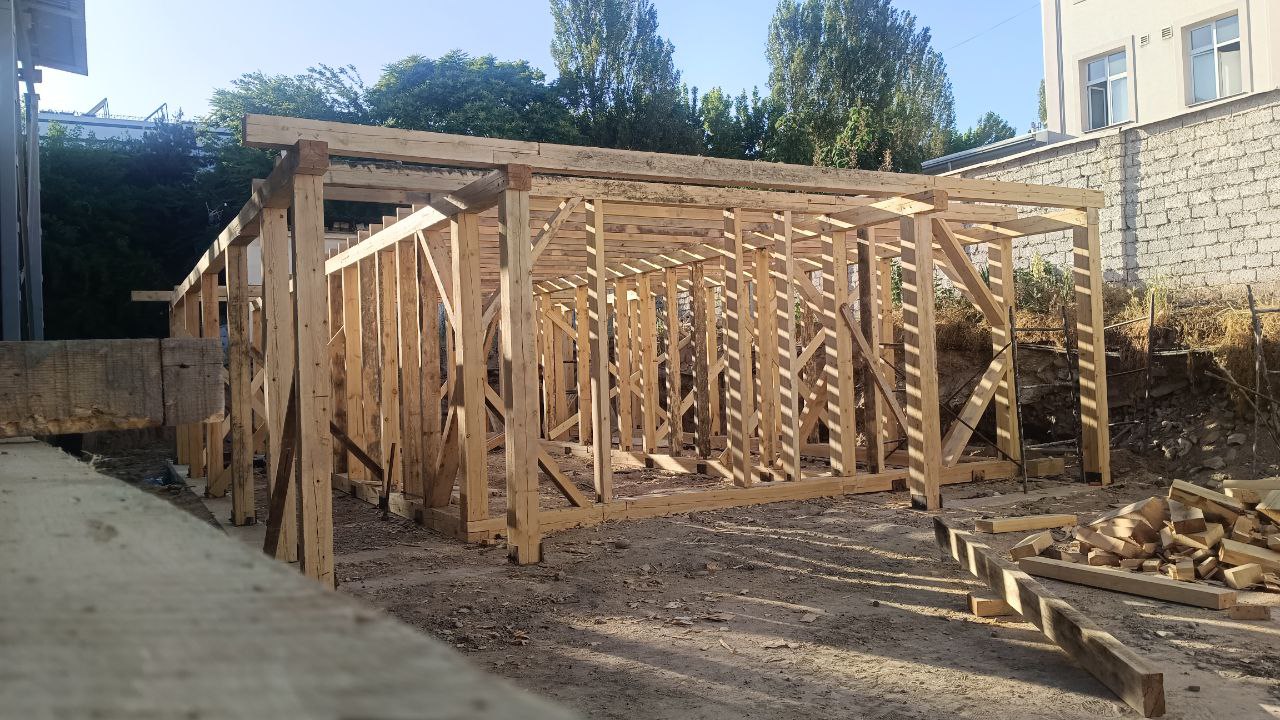
Model House Construction in "TIIAME" NRU, Tashkent, Uzbekistan
01.07.2024
The construction process of the VEGERA model house began with a fundamental yet essential stage: the clearance and preparation of the plot. Located on the grounds of the "TIIAME" National Research University, the selected site had remained unused for several years prior to the project. The plot required significant manual and mechanical clearing to make it suitable for foundational work. Importantly, the location of the model house was chosen strategically—adjacent to the recently established wood engineering workshop. This workshop, developed shortly after the launch of the VEGERA project, plays a key role in processing locally sourced timber and promoting sustainable construction techniques. Clearing the land not only marked the physical beginning of the model house but also symbolized a broader transition: the re-purposing of the university grounds for innovative, climate-adapted building methods. This initial phase laid the groundwork for a construction project rooted in renewable materials, academic collaboration, and sustainable development principles. Following the successful clearance of the site, the second stage marked the beginning of construction work on the VEGERA model house. Unlike conventional building practices commonly used in Uzbekistan, this phase emphasized sustainability and material efficiency. The foundation was laid using a minimized amount of cement, in line with the project’s goal to reduce carbon-intensive materials. Instead of a full concrete slab, a lightweight, low-emission foundation system was implemented, reducing both material consumption and environmental impact. Once the foundation was completed, the wooden carcass of the house began to take shape. Constructed from locally sourced logs, the timber frame served as the structural backbone of the model house. Gradually, the walls were assembled using an innovative insulation method developed by the VEGERA project team. This method—based on extensive research and testing—relied on natural, locally available materials and aimed to enhance energy efficiency, thermal comfort, and overall sustainability. Each construction step reflected the project’s mission to demonstrate a climate-adaptive, regionally appropriate alternative to conventional housing models in Uzbekistan. The final stage involved the completion of the model house, bringing together all the elements of sustainable design, material efficiency, and structural safety. Built entirely on the campus of TIIAME NRU, the house stands next to the wood engineering workshop—symbolically and practically connecting education with real-world application. Designed as a demonstration object, the house will serve as a practical example of successful wood-based construction, offering students hands-on exposure to sustainable building practices. Beyond its demonstration role, the house will be actively used by both students and academic staff for educational and research purposes. Special attention was given to ensuring all safety standards were met throughout the construction process. At the same time, the design prioritized aesthetic quality to create a visually appealing structure that could inspire local communities to embrace similar climate-friendly and resource-efficient building solutions.